Rio’s attractions are spread across a city divided by mountains, water and busy roads. A good day is usually built around one area and one substantial outing. The selections below explain what each experience adds, how much space to give it and what to pair it with. Time allowances are planning suggestions, not official visit limits or guarantees about queues.
For the famous views: Christ or Sugarloaf?
Christ the Redeemer: the monument and the climb through forest
Christ the Redeemer stands on Corcovado, the mountain behind much of the South Zone. There are two main organized ways up: the cog railway from Cosme Velho, a neighborhood at the foot of the mountain, and official vans using designated boarding points.
Choose the Corcovado train if the ascent is part of the appeal. The current ordinary adult ticket is R$134, including the return train and monument admission. The ride gives the outing a beginning and an end beyond the viewing terrace. The van can make more sense when its boarding point fits your hotel and the rest of the day.
Give the visit a half-day slot including the journey to the departure point, check-in, queues and time at the top. Keep the afternoon loose rather than stacking another timed ticket immediately afterward. The complete Christ guide explains how the ticket routes differ.
During the current escalator replacement work, the final approach to the platform includes 80 steps. Assisted stair-climbing equipment is available with restrictions, including no operation on wet surfaces or in rain. If you need that assistance, review the access arrangements before buying your ticket.
Sugarloaf: a more extended viewpoint outing
Sugarloaf is the steep granite peak beside Guanabara Bay. The cable car rises in two stages from Praia Vermelha to Morro da Urca and then to Sugarloaf itself. That makes this a place to spend time, with more than one level from which to look across the city.
Allow roughly two to three hours inside, plus travel and any queues, if you want an unhurried visit. Clear weather matters more than squeezing the attraction into a particular day. Sunset is a choice for the light and atmosphere, not a guarantee that you will avoid crowds.
The ordinary full-price Bondinho ticket is R$205; discounted categories require the relevant eligibility. The Sugarloaf guide explains ticket choices and what a faster-access product changes. Pair the visit with time around Praia Vermelha and Urca rather than a cross-city dash to a museum.
If you can do only one: choose Christ for the monument and the train journey; choose Sugarloaf if you would rather linger across successive viewpoints. If you do both, spread them across the trip so you have more than one chance at a clear view.
For a beach day: choose the neighborhood as well as the sand
Copacabana and Leme share a long oceanfront curve, with a promenade that makes a beach outing worthwhile even when you do not plan to swim. Start with a walk, stop for a drink or lunch, and decide how much of the day belongs on the sand. The Copacabana neighborhood guide helps you pick the part that fits your stay.
Ipanema offers another version of the day: beach time combined with the streets, cafés and restaurants behind it. At its eastern end, Arpoador gives a different perspective along the coastline. Keep rock surfaces, waves and the route back in mind rather than treating a popular sunset spot as automatically safe in every condition.
Farther west, Leblon works well for a slower combination of beach, neighborhood walking and a meal. There is little reason to tick off all the beaches in one afternoon. Choose one stretch, leave valuables you do not need at the hotel and make the day about being there.
Beach access does not require an admission ticket. Chairs, umbrellas, food and drinks are separate purchases; agree the price before using a rental. Swimming is a separate decision from enjoying the beachfront: water quality, surf and personal security are different questions. Follow current beach conditions and lifeguard instructions, and do not leave belongings unattended to enter the water.
For gardens and a gentler outdoor morning
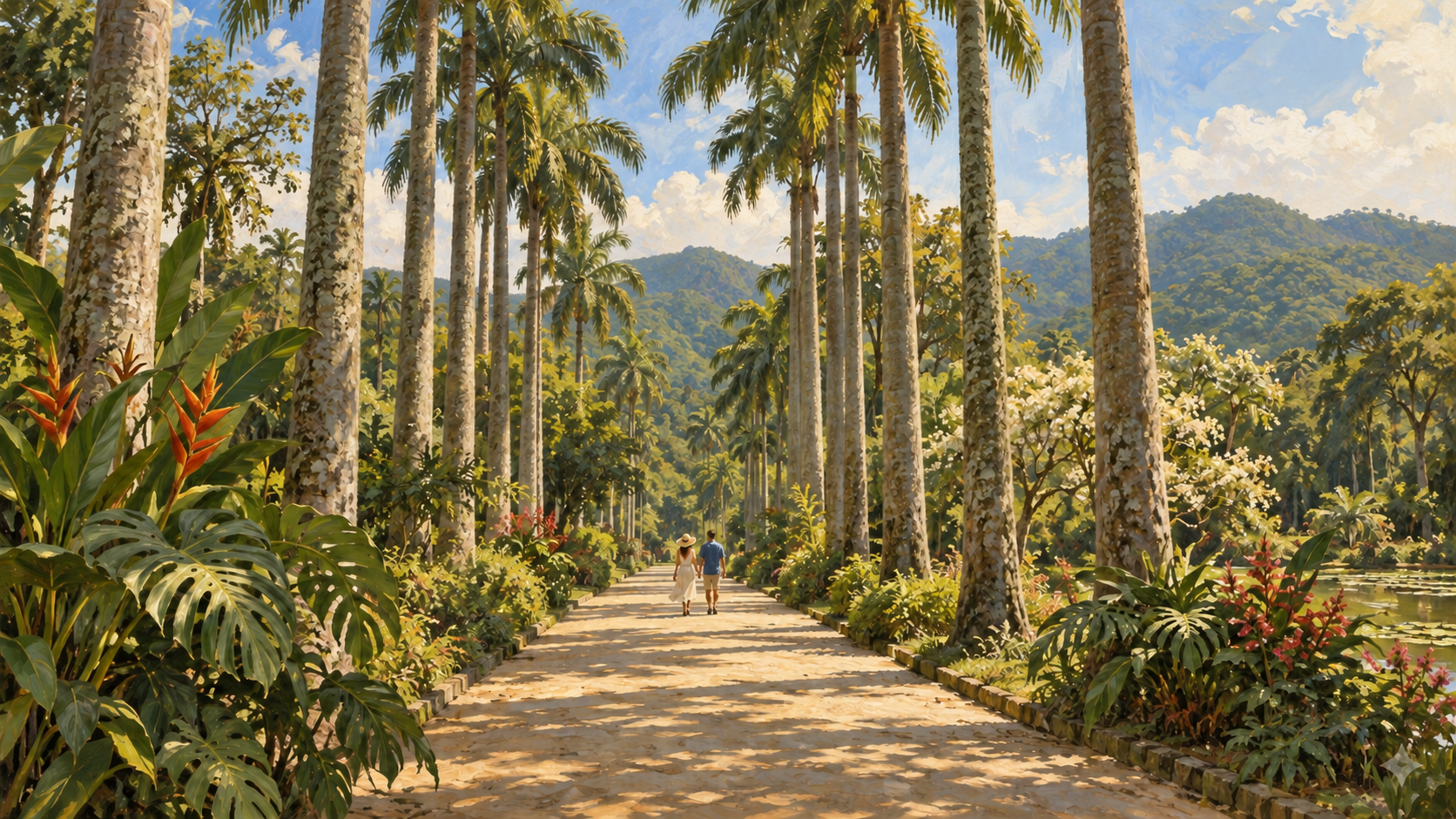
The Rio Botanical Garden is a good choice when you want an outdoor experience without planning a mountain hike. Walk among the planted collections and palm avenues at a pace that leaves room to stop, rather than trying to turn the garden into a shortcut between other sights.
Allow about two hours as a starting plan, longer if plants and photography are a particular interest. The ordinary international visitor ticket is R$80; Brazilian residents have a different rate. Buy online by card or Pix, or use Pix or cash at the ticket office. A foreign card in your pocket does not solve an on-site cash-or-Pix-only counter.
This works well as the principal outing of a morning, followed by lunch and a less structured afternoon. It is still outdoors, so a garden visit is not a substitute for a museum during heavy rain.
For a cultural day: Centro and the port
Two useful anchors are the CCBB cultural center and the Museum of Tomorrow. Their exhibitions and setting offer different experiences, so choose according to your interest rather than trying to cover both simply because they appear near each other on a map.
CCBB: exhibitions in a central cultural landmark
The Centro Cultural Banco do Brasil, usually shortened to CCBB, hosts exhibitions and a broader cultural program. Exhibitions are free, with tickets available through its booking system or the box office. Performances have their own arrangements; free exhibitions do not mean every event in the building is free.
Regular opening is Wednesday to Monday, 9am to 8pm, with Tuesday closed. Read the current exhibition program before selecting your day, and allow around 90 minutes to two hours for an exhibition you want to see. It can be the center of a daytime Centro outing without requiring a packed list of additional stops.
Museum of Tomorrow: a substantial indoor visit on the waterfront
The Museum of Tomorrow stands at Praça Mauá in the port area. Its focus on science, the future and humanity’s choices makes it a different outing from a conventional collection of historic objects.
Regular opening is Thursday to Tuesday, 10am to 6pm, with final entry at 5pm. Wednesday is the closing day. Full admission is R$40, and tickets are booked for a day and time. Give the visit around two hours, then decide whether weather and energy suit a waterfront walk.
The VLT, Rio’s street tram, helps connect parts of Centro and the port. Plan the actual stops with the operator’s map; proximity on a tourist map does not remove the need to consider the route and time of day.
For forest: plan a Tijuca outing deliberately
Tijuca National Park is not one entrance followed by one standard walk. Its visitor areas include the Floresta sector, Serra da Carioca and the Pedra Bonita/Pedra da Gávea sector. Decide which part you want to visit and what level of walking suits you before arranging transport.
The park’s visitor guidance gives regular opening of 8am to 5pm, with free entry apart from the separately ticketed Corcovado attraction. The park does not provide a guiding service. If you want a guided walk, arrange an appropriate independent guide in advance and agree the route, effort, transport and weather alternative.
For a first visit, a planned forest outing is a better proposition than choosing a demanding summit from a photograph and improvising the rest. Use marked routes, check current access and weather, and leave enough daylight for the return. Make it the main activity of that part of the day rather than a filler between timed bookings.
For music: choose a performance, then plan the evening
An evening of live Brazilian music adds something a daytime sightseeing list cannot. In Lapa, Carioca da Gema has a changing program of samba and other Brazilian music at Avenida Mem de Sá, 79. Choose a dated performance from the current calendar rather than assuming the same musicians play every night.
Build dinner and transport around the show’s actual starting time. A venue’s opening time and the main performance time can differ, and a ticket does not necessarily answer questions about a table or food. Those details belong to the specific evening you book. Arrange a clear pickup for the journey back rather than leaving the late-night route as an afterthought.
Food also deserves space on the schedule without needing to become another ticketed attraction. Set aside a proper lunch in the neighborhood you are exploring, or choose a restaurant near the evening venue. That is often a more enjoyable use of limited time than crossing the city for every meal.
Put the experiences together
For three full days, start with one landmark outing, one beach-and-neighborhood day and one cultural outing; add the second viewpoint if it is a priority and conditions cooperate. With five days, there is room for both viewpoints, Centro, a garden or forest outing and genuinely unhurried beach time. Music can fit into an evening, but keep the following morning realistic.
The Rio itinerary guide provides the day-by-day framework. Use this selection to change its emphasis: more art, more time outside or fewer paid attractions. A beach walk, a free exhibition and a long lunch can belong in a good Rio day just as much as its most famous view.
Published .